
 Cart is empty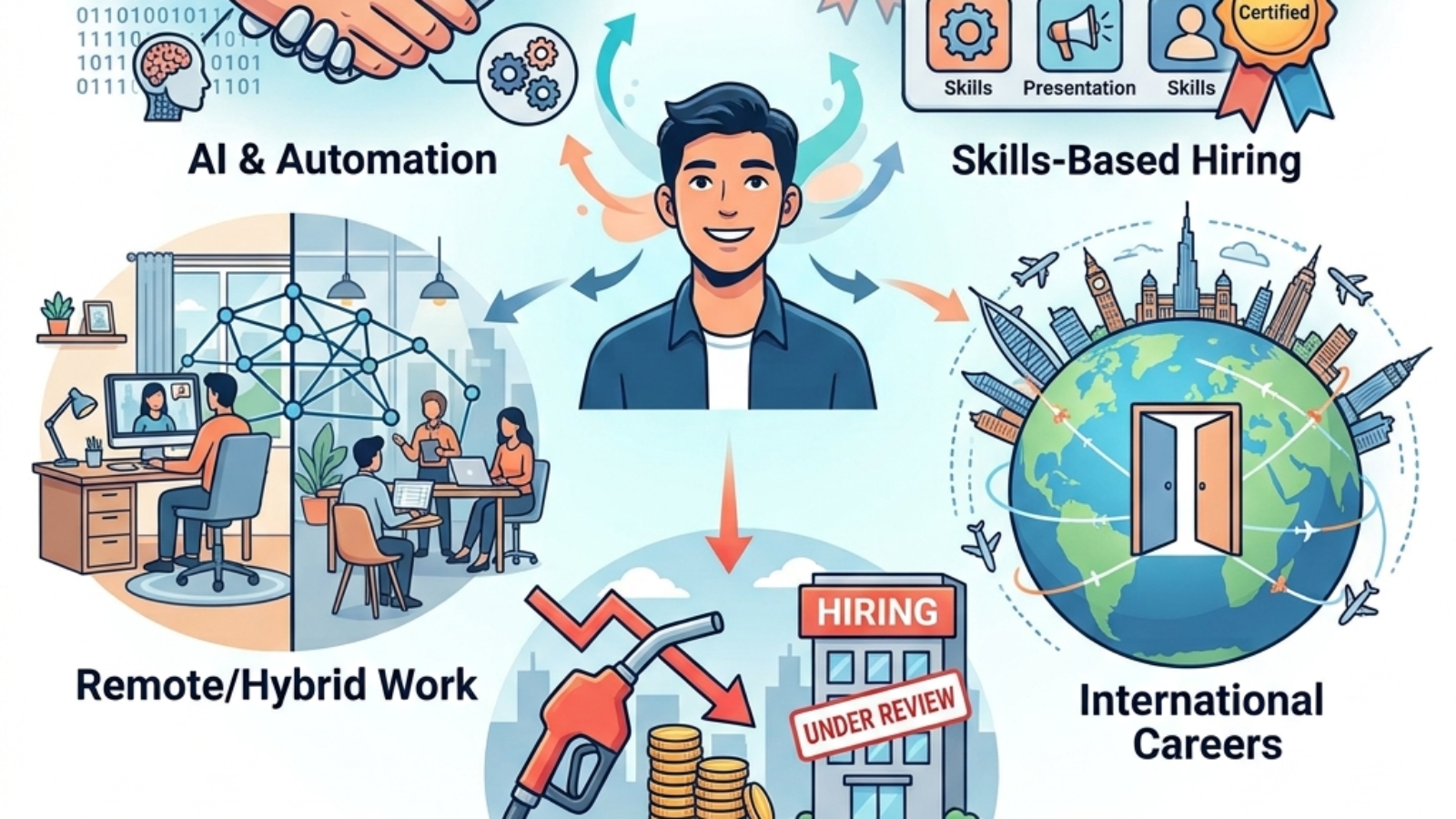
You don’t need to work in politics, finance, or international business to feel the impact of global events. Changes happening around the world can affect companies, hiring decisions, salaries, and career opportunities.
In 2026, artificial intelligence, energy costs, changing hiring practices, flexible work, and global business expansion are influencing jobs, hiring, and career opportunities.
The important question is not whether you can control these changes. You can’t.
The better question is: How can you prepare for them?
Here are five global developments that could affect careers in 2026 and practical steps you can take to stay prepared.
1. AI Adoption Is Reshaping Jobs
Artificial intelligence is becoming part of everyday work across many industries. Companies are using AI for tasks such as content creation, customer support, data analysis, software development, research, and administrative work.
This doesn’t mean that AI will replace every job. Instead, many jobs are changing as companies look for employees who can work effectively with new technology.
Some routine tasks may become automated, while employees may be expected to handle more complex decisions, creativity, communication, and problem-solving.
What this means for your career
If you’re looking for a new job or trying to grow in your current role, learning how to use AI tools can make your skills more useful.
You can:
- Learn AI tools used in your industry.
- Use AI to improve your productivity.
- Add relevant AI skills to your resume and LinkedIn profile.
- Learn how to check and improve AI-generated information.
- Focus on human skills such as communication, creativity, and critical thinking.
Career Tip: Don’t think of AI only as competition. Learn how to use it as a workplace tool.
2. Energy Costs Can Affect Hiring
Changes in fuel and energy costs can create pressure for businesses, especially companies that depend heavily on transportation, manufacturing, construction, logistics, or large physical operations.
When operating costs change, businesses may adjust their budgets, prices, expansion plans, technology investments, or hiring decisions.
This doesn’t mean that higher energy costs automatically lead to fewer jobs. The impact can vary by industry and country.
Industries that may feel the impact
- Logistics and transportation
- Manufacturing
- Construction
- Retail
- Travel and tourism
- Energy
What can job seekers do?
Don’t limit your job search to one industry.
Look at companies and sectors that continue to invest in areas such as technology, healthcare, education, cybersecurity, digital services, and other growing fields.
Also consider developing skills that can be useful across different industries.
Career Tip: The more transferable your skills are, the easier it can be to adapt when one industry slows down.
3. Skills-Based Hiring Is Changing Recruitment
A degree is still valuable for many careers, but employers are increasingly interested in what candidates can actually do.
Skills such as communication, problem-solving, digital marketing, data analysis, customer service, coding, project management, sales, and technology skills can help candidates stand out.
Instead of simply saying:
“I have five years of experience.”
Show what you achieved during those five years.
For example:
“Managed customer accounts and improved repeat business.”
Specific achievements give employers a clearer picture of your abilities.
Ask yourself
- Can I solve real business problems?
- Have I learned a new skill recently?
- Does my resume show achievements instead of only responsibilities?
- Can I demonstrate my skills with real examples?
- Are my LinkedIn profile and resume up to date?
If the answer is “not yet,” use this year to close those gaps.
Career Tip: Don’t just list what you did. Show the results you created.
4. Remote and Hybrid Work Are Reshaping the Workplace
Remote and hybrid work have changed how many companies organize their teams.
The availability of flexible work varies by industry, country, and employer, but digital collaboration has become an important part of many workplaces.
Remote and hybrid roles can be found in areas such as:
- Software development
- Customer support
- Digital marketing
- Graphic design
- Content writing
- Virtual assistance
- Finance and accounting
However, working remotely requires more than simply having a laptop and internet connection.
Employers also increasingly use different hiring and recruitment practices, so understanding how modern recruitment works can help you prepare.
How can you stand out?
Highlight these skills on your resume and LinkedIn profile.
If you have worked remotely or in a hybrid environment, mention the tools you used and the results you achieved.
For example, instead of saying:
“Worked remotely.”
You could say:
“Managed customer requests remotely using CRM and collaboration tools while meeting daily response targets.”
Career Tip: Remote work skills are not only about working from home. They are about communication, organization, accountability, and digital collaboration.
5. Global Business Expansion Can Create New Opportunities
Companies that expand into new countries need employees who can understand different markets, communicate with international teams, and support customers across regions.
This can create opportunities in areas such as:
- Sales
- Marketing
- Information technology
- Customer support
- Finance
- Human resources
- Supply chain management
- Digital services
International business can also increase the value of skills such as communication, cultural awareness, language ability, technology knowledge, and market research.
How can you prepare?
If you want to work for international companies, start building skills that can be used across borders.
You can:
- Improve your communication skills.
- Learn about international markets.
- Strengthen your digital skills.
- Build a professional LinkedIn network.
- Learn another useful language if it fits your career.
- Look for international and remote job opportunities.
Career Tip: You don’t necessarily need to move to another country to work internationally. Many companies now operate across multiple markets.
Which Careers Could Benefit From These Changes?
Global changes don’t affect every profession in the same way. Some career areas may see new opportunities as businesses invest in technology, digital services, security, healthcare, and international operations.
| Career area | Why it matters |
|---|---|
| AI and Technology | Businesses are adopting automation and AI tools |
| Cybersecurity | More digital systems create greater security needs |
| Data and Analytics | Companies need data to make better decisions |
| Digital Marketing | Businesses compete for customers online |
| Healthcare | Healthcare services remain essential |
| Supply Chain | Global businesses need efficient logistics |
| Renewable Energy | Energy changes create new areas of investment |
| Customer Experience | Businesses still need strong human interaction |
This doesn’t mean these careers are guaranteed to grow everywhere. Demand depends on the country, industry, company, and economic conditions.
The important lesson is to watch where businesses are investing and build skills that match those changes.
How Can You Prepare for Changes in the Job Market?
You don’t need to predict the future perfectly.
Instead, focus on the things you can control.
1. Learn one useful skill
Choose a skill that can improve your current career or help you move into a new role.
2. Update your resume
Don’t wait until you lose your job to update your resume. Add new skills, achievements, certifications, and measurable results regularly.
3. Improve your LinkedIn profile
Your LinkedIn profile should clearly explain what you do, what skills you have, and what type of opportunities you are looking for.
4. Follow industry trends
Spend a few minutes each week reading about your industry, technology, hiring trends, and major business changes.
5. Build your professional network
Connect with people in your industry, former colleagues, recruiters, and professionals working in roles you want to pursue.
6. Keep learning
Online courses, certifications, practical projects, and real-world experience can help you stay competitive.
Small improvements today can create better opportunities tomorrow.
Final Thoughts
Global events may seem far away, but they can influence businesses and careers in ways we don’t always notice immediately.
AI adoption can change job tasks. Energy costs can affect business decisions. Skills-based hiring can change how employers evaluate candidates. Flexible work can change where people work. Global business expansion can create opportunities in new markets.
You don’t need to predict every change.
Adapting also means understanding how workplace expectations and office culture are changing.
The professionals who remain competitive are often those who keep learning, understand their industry, build useful skills, and stay open to new opportunities.
Your next career opportunity could come from a change that started halfway around the world.
Join the Conversation
Which trend do you think will have the biggest impact on careers in 2026?
- 🤖 Artificial Intelligence
- 🌍 Global Economy
- 💻 Remote and Hybrid Work
- 📚 Skills-Based Hiring
- 🚀 New Technology
Share your thoughts in the comments.
Leave A Comment