
 Cart is empty
Pregnancy is the most beautiful stage in every women’s life. It makes the women complete. A woman went through so many processes from keeping an eye on the ovulation date to balancing body weight and health to achieve this stage. But after taking all care and precaution sometimes some complication occurs which we need to prevent before they got worst.
Today we are going to learn one of these complications which are rare but exist is Molar Pregnancy. To completely understand Molar Pregnancy, we will cover the following topics:
1- What is a molar pregnancy?
2- Who is likely to have a molar pregnancy?
3- What are the types of molar pregnancies?
4- What are the Causes and symptoms of a molar pregnancy?
5- What are the complications
6- How it can Prevent
7- What questions should I ask my doctor?
So, let’s start with our first topic
What is a molar pregnancy?
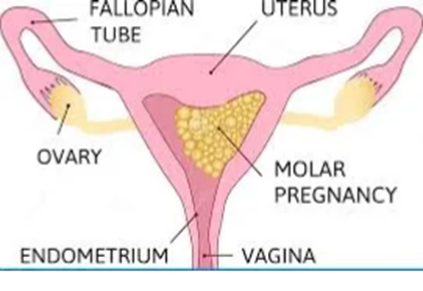
A molar pregnancy occurs when an egg and sperm join incorrectly at fertilization and a noncancerous tumor form instead of a healthy placenta. The tumor, or mole, cannot support a developing embryo, and the pregnancy ends. It is also called a hydatidiform mole. Molar pregnancies are a type of gestational trophoblastic disease. In a molar pregnancy, a tumor grows in the uterus. The tumor forms as fluid-filled cysts resembling clusters of grapes.
A molar pregnancy almost always ends in pregnancy loss. Most women who have a molar pregnancy can go on to have a healthy pregnancy later. If not treated, a molar pregnancy can be dangerous to the woman. It sometimes can cause a rare form of cancer.
Who is likely to have a molar pregnancy?
You are more likely to have a molar pregnancy if you:
1- Are younger than age 20
2- Are you over age 40
3- Have a history of molar pregnancies
4- Have had two or more miscarriages
5- Live in certain geographical locations, including the Philippines, Southeast Asia, and Mexico
What are the types of molar pregnancies?
There are two categories of molar pregnancy: complete and partial.
In Complete Molar Pregnancies, the tissue making up the placenta is abnormal, and no embryo forms. It happens when chromosomes from the mother’s egg are lost or not working, and chromosomes from the father are copied, so all 46 chromosomes come from the father.
A Partial Molar Pregnancy occurs when an abnormal placenta forms along with an embryo. The embryo may start to grow, but it can’t survive. This condition happens when the embryo has two sets of chromosomes from the father and one from the mother, so it has 69 chromosomes instead of 46.
In these cases, embryos have severe birth defects. The developing tumor quickly overcomes the embryo and almost always ends in pregnancy loss. About 1 in 1,000 pregnancies (less than 1 percent) in the United States is a molar pregnancy. The risk of having another molar pregnancy is only about 1 to 2 in 100 women (1 to 2 percent).
What are the Causes and symptoms of a molar pregnancy?

Causes of molar pregnancy:
A molar pregnancy is caused by an abnormally fertilized egg. Human cells normally contain 23 pairs of chromosomes. A normal Embryo has 46 chromosomes, 23 pair comes from the father, and the other from the mother.
This condition happens when the embryo has two sets of chromosomes total of 46 only from the father and chromosomes from the mother’s egg are lost or not working or sometimes two sets of chromosomes from the father and one from the mother, so it has 69 chromosomes instead of 46.
In a healthy pregnancy, a placenta forms to nourish the growing embryo. With a molar pregnancy, instead of a placenta, a tumor forms inside the uterus. A developing embryo is almost never involved in a molar pregnancy.
Occasionally, molar pregnancies develop after a miscarriage, a successful pregnancy, or an ectopic pregnancy, when cells remain in the uterus. In an ectopic pregnancy, a fertilized egg implants outside the uterus.
Symptoms of molar pregnancy:
A molar pregnancy may seem like a healthy pregnancy at first. But call your health care provider right away if you have any of these signs and symptoms:
1- Bleeding from the vagina in the first 3 months of pregnancy
2- Severe nausea and vomiting.
3- Grape-like cysts that come from your vagina. A cyst is a sac filled with fluid.
Your Health provider may find other signs of a molar pregnancy during routine ultrasound scans, including
1- Extremely high blood pressure
2- High HCG levels
3- No heartbeat
4- A fetus that’s unexpectedly small for gestational age
5- Low amniotic fluid
6- Increases in abdominal size that occur much faster than in a healthy pregnancy
What are the complications?
Occasionally, parts of the molar pregnancy remain in the uterus after a spontaneous end of the pregnancy or after treatment. In these cases, the persistent gestational trophoblastic disease may develop.
Persistent gestational trophoblastic disease means the initial surgery to remove the mole doesn’t cure the condition. When this happens, cells from the mole have grown into the muscle layer around the uterus. A mole that grows into the muscle layer is called an invasive mole. Invasive moles form in fewer than 1 in 5 women after having a complete mole removed.
In rare cases, the persistent gestational trophoblastic disease causes a type of cancer called choriocarcinoma. Choriocarcinoma forms within the uterus and may spread to other parts of the body. Doctors may do a chest X-ray to determine if the mole has spread to the lungs. If choriocarcinoma has spread, it requires cancer treatments such as chemotherapy.
How it can Prevent
There is no way to prevent a molar pregnancy at first but if you had a molar pregnancy before so you can get treatment to prevent your future pregnancies. The risk of recurrence is low but higher than the risk for women with no previous history of molar pregnancy.
Your Health care provider will monitor your HCG levels once a month for up to one year and ask you to wait for six months to one year before trying to become pregnant to help ensure no trace of the molar pregnancy remains in your uterus.
What questions should I ask my doctor?

Preparing a list of questions in advance will help you make the most of your time with your doctor. For molar pregnancy, some basic questions to ask include:
1- What is likely causing my symptoms or condition?
2- What kind of tests do I need?
3- What needs to be done now?
4- What treatment approach do you recommend?
5- Do I need to follow any restrictions?
6- What emergency signs and symptoms should I watch for at home?
7- What are my chances for a successful future pregnancy?
8- How long should I wait before trying to become pregnant again?
9- Does my condition increase my risk of developing cancer in the future?
Leave A Comment