
 Cart is empty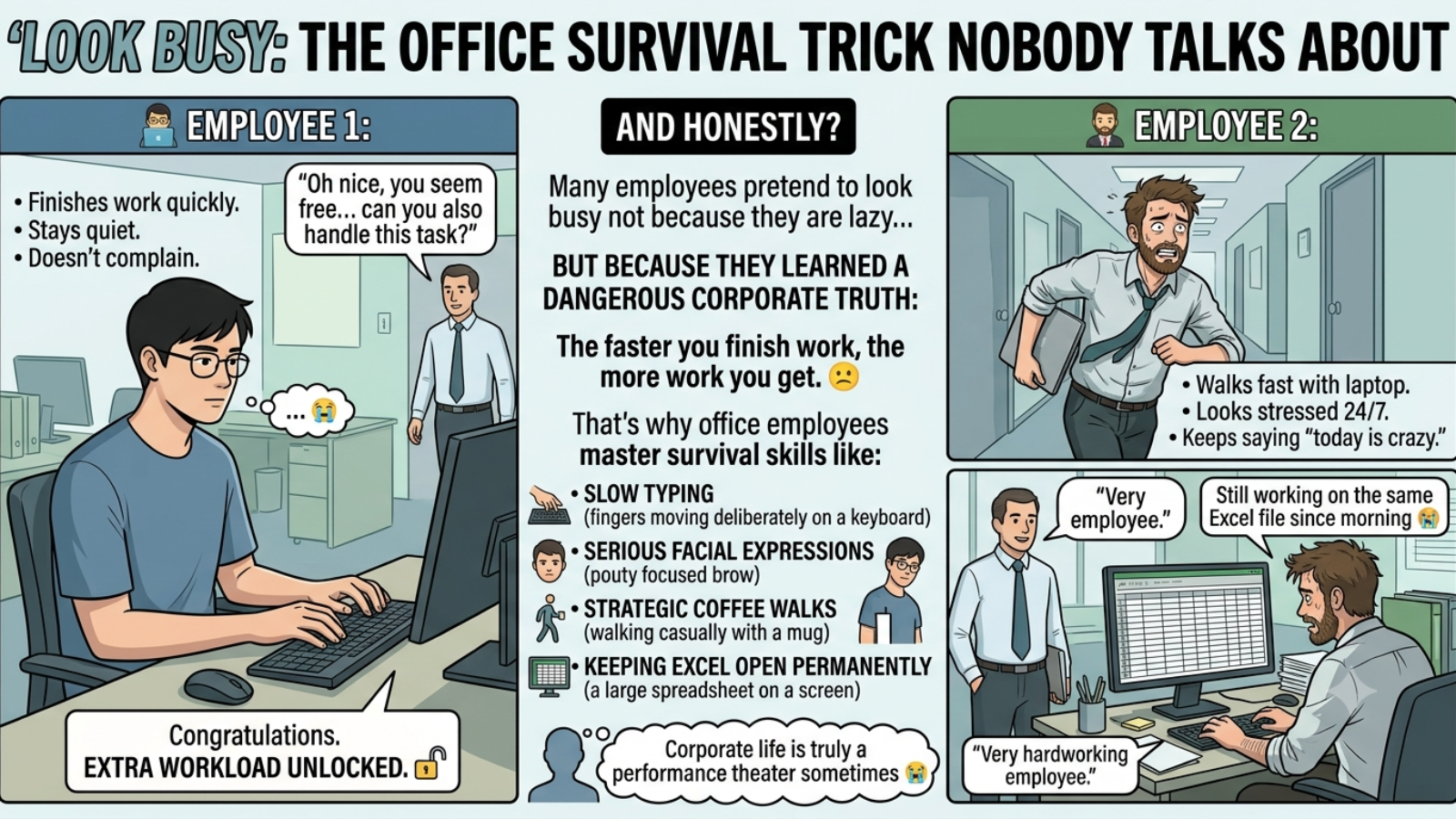
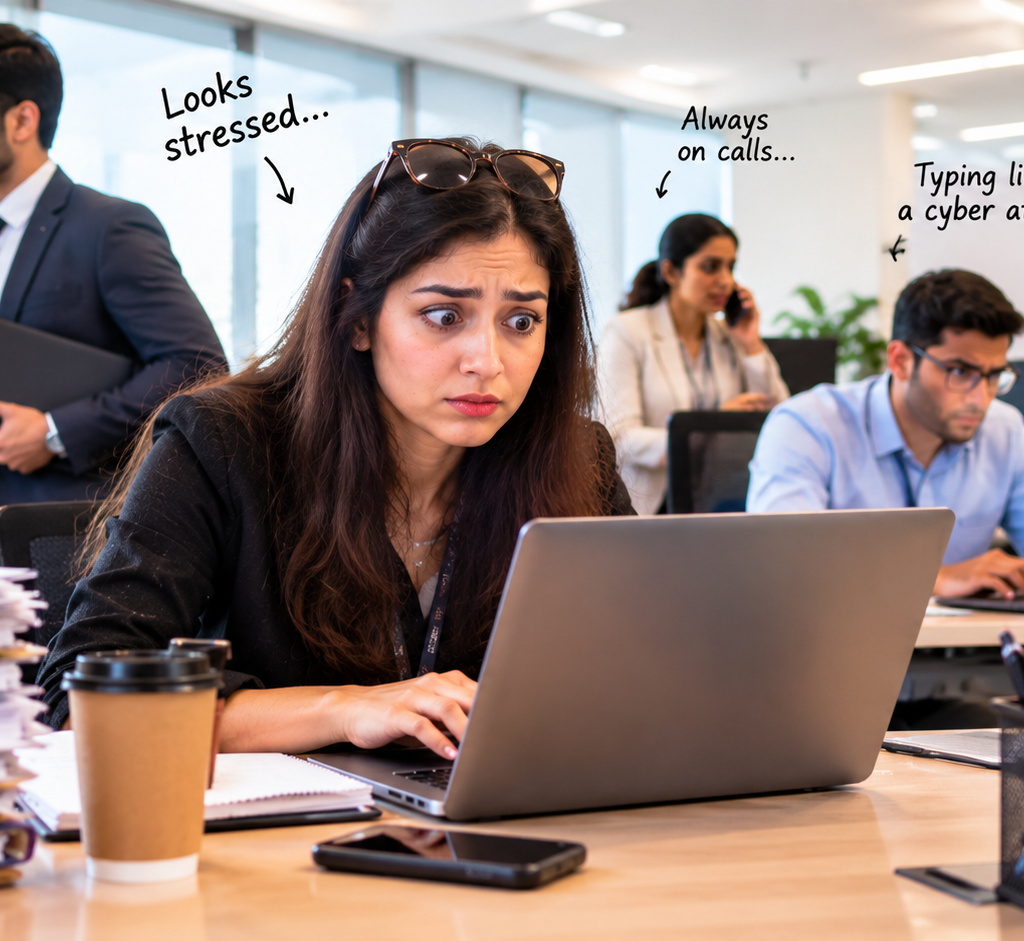
Every office has them — the employees who always looking busy at work. They walk very fast with a laptop, look stressed all day, and type aggressively like they’re stopping a cyber attack.
- Walks very fast with a laptop
- Looks stressed all day
- Types aggressively like they’re stopping a cyber attack
- Keeps saying “busy busy busy” every hour
Meanwhile, nobody actually knows what they’re doing 😭
And somehow…
Managers love them.
While the employee who quietly finishes all tasks quickly?
Gets rewarded with… more work.
Welcome to corporate life.
The Office Performance Theater
Looking busy at work can sometimes become more important than showing the actual results of an employee’s efforts.
Let’s be honest.
In reality, some offices are less about productivity and more about looking productive.
Modern office survival sometimes depends on:
- Looking stressed
- Staying online on Teams
- Walking quickly for no reason
- Keeping 17 tabs open
- Saying “today is crazy” dramatically
Because in many workplaces:
Looking busy matters more than actually finishing work.
This kind of office culture can create some interesting characters, including the employee who somehow knows every piece of office news before everyone else.
The Biggest Mistake a Fast Employee Makes
Employees who finish their tasks quickly may feel that looking busy at work is safer than showing they have spare time.
Imagine two employees.
👨💻 Employee A
Finishes all tasks in 2 hours.
Then:
- Sits quietly
- Doesn’t complain
- Doesn’t create drama
- Doesn’t send unnecessary emails
Manager notices:
“Oh nice… you seem free.”
Five seconds later:
“Can you also handle this task?”
Congratulations 😭
You just unlocked:
Extra Workload Mode
👨💼 Employee B
Still “working” on the same Excel sheet since morning.
Walks around seriously with notebook in hand.
Keeps saying:
“I’m overloaded.”
Switches between tabs dramatically.
Replies late intentionally to look busy.
Manager thinks:
“Very hardworking employee.”
No extra work assigned.
Peace protected successfully.
Why Employees Pretend to Looking Busy at Work
This is the funniest but most relatable part. Looking busy at work can become a habit when employees believe that being visibly occupied protects them from additional tasks.
Many employees are not pretending because they are lazy. Instead, they are pretending because they learned something dangerous in corporate life:
“If you finish work quickly, you get punished with more work.”
So employees slowly master survival techniques like:
- Slow typing
- Looking stressed
- Taking strategic coffee walks
- Delaying replies slightly
- Keeping Excel open permanently
Not because they enjoy acting.
But because they want mental peace 😭
Looking Busy at Work: The “Efficient Employee Curse”
In some offices, looking busy at work becomes a way for employees to manage expectations and avoid an unrealistic workload.
The hardworking employee becomes:
- The reliable employee
- The “give it to them” employee
- The “they’ll finish quickly” employee
As a result:
- More tasks
- More pressure
- More deadlines
- Same salary
Meanwhile the fake busy employee protects their workload like a professional bodyguard.
Every Office Has These Characters Who’s Looking Busy at Work
☕ The Tea Area CEO
Knows:
- All office gossip
- Who resigned
- Which team is suffering
- Who got salary increment
Most informed human in the company honestly.
📧 The Email Specialist
Simple message:
“Please send file.”
Their version:
“Kindly find attached the requested document for your kind review and further necessary action.”
Three paragraphs.
One attachment.
Managers impressed instantly.
🧑💻 The “Always Busy” Employee
Always typing.
Always serious.
Always “in a meeting.”
But somehow never available when actual work appears 😭
😌 The Quiet Fast Worker
Finishes tasks quickly.
Helps others.
Stays calm.
And gets rewarded with:
“Can you also do this before leaving?”
Why Employees Looking Busy at Work
Many employees intentionally avoid looking “too free.”
However, the moment a manager sees you relaxed, another task appears magically.
That’s why some employees:
- Open random documents
- Walk fast for no reason
- Pretend to read emails deeply
- Keep clicking around seriously
This is not productivity.
This is office camouflage.
Looking Busy at Work: Meetings Are Part of the Acting Too
Corporate meetings are amazing honestly.
Some employees speak for 10 minutes and say absolutely nothing.
For Example:
“We need to strategically optimize operational workflows moving forward.”
Translation:
“I also don’t know what’s happening.”
Still everyone nods seriously.
Work From Home Exposed Everything
This is why many companies became uncomfortable during work-from-home culture.
As a result, suddenly:
- Real output became visible
- Fake office acting reduced
- Productivity became measurable
And managers discovered something shocking:
The quiet employees were actually doing most of the work.
Jokes Aside… This Looking Busy at Work Culture Creates Burnout
Even so, funny as it sounds, this office culture becomes mentally exhausting. When looking busy at work matters more than actual results, employees may feel pressure to perform busyness instead of focusing on meaningful tasks.
Over time, efficient employees slowly feel:
- Punished for being fast
- Overloaded constantly
- Unappreciated
While “busy looking” employees survive peacefully.
That’s why many hardworking people eventually stop giving 100% — and eventually start thinking about the workplace problems that push employees to leave.
A Healthy Workplace Looks Different
Instead, good managers should focus on:
- Results
- Efficiency
- Smart work
- Quality
Rather than focusing on:
- Who walks fastest with a laptop
- Who stays late unnecessarily
- Who looks stressed
Because being exhausted does not always mean being productive.
Final Thought
Corporate life has taught employees a strange lesson: sometimes, finishing work quickly means getting even more work.
That’s why some employees feel the need to looking busy at work, even when they’ve already completed their tasks. Others keep working quietly and hope their efforts will be recognized.
But a healthy workplace should value results, quality, and fair workloads—not just how busy someone looks.
The real goal should be getting meaningful work done, not winning an award for looking the busiest. 😭
⭐ The Moral
In unhealthy workplaces, employees learn to hide their efficiency to protect their peace.
In healthy workplaces, productivity is appreciated instead of punished.
🤔 Now Tell Honestly…
What would you prefer?
✅ Finish your work quickly and get extra workload?
OR
✅ Pretend to look busy and protect your peace?
Suggest with your comment 😭
Leave A Comment